If your compact espresso machine is suddenly making louder noises than usual, brewing extra slowly, or producing coffee that tastes slightly sour or bitter, it’s likely crying out for a deep clean. Minerals like calcium and magnesium naturally build up inside your machine’s heating element over time—a process known as scaling.
Learning how to descale a compact espresso machine regularly is essential for extending its lifespan and maintaining that rich, café-quality espresso taste. In this step-by-step guide, we’ll walk you through a simple, 5-step maintenance routine using easy-to-find supplies.
Recommended Cleaning & Descaling Supplies
| Buy on Amazon | Product Name | Best For | Type |
|---|---|---|---|
| Check Price | De’Longhi EcoDecalk Liquid | Universal Limescale Descaling | Natural Plant Liquid Solution |
| Check Price | Urnex Cafiza Cleaning Powder | Group Head & Portafilter Deep Clean | Detergent Powder Solution |
Pros & Cons of Regular Descaling
Maintaining a routine cleaning schedule is vital for keeping compact espresso machines running in small kitchens.
Pros:
- Extends machine lifespan by preventing mineral clogs and heating failure.
- Restores optimal water flow and ideal brewing temperatures.
- Eliminates stale coffee oils and bitter taste from daily extractions.
Cons:
- Requires 15 to 20 minutes of dedicated rinse cycles every 2–3 months.
- Improper flushing can leave temporary commercial cleaning agent residue.
Universal Espresso Machine Descaling Solution
Eco-friendly, fast-acting solution designed to safely break down limescale without damaging internal pumps.
Step 1: Prep the Machine & Mix Solution
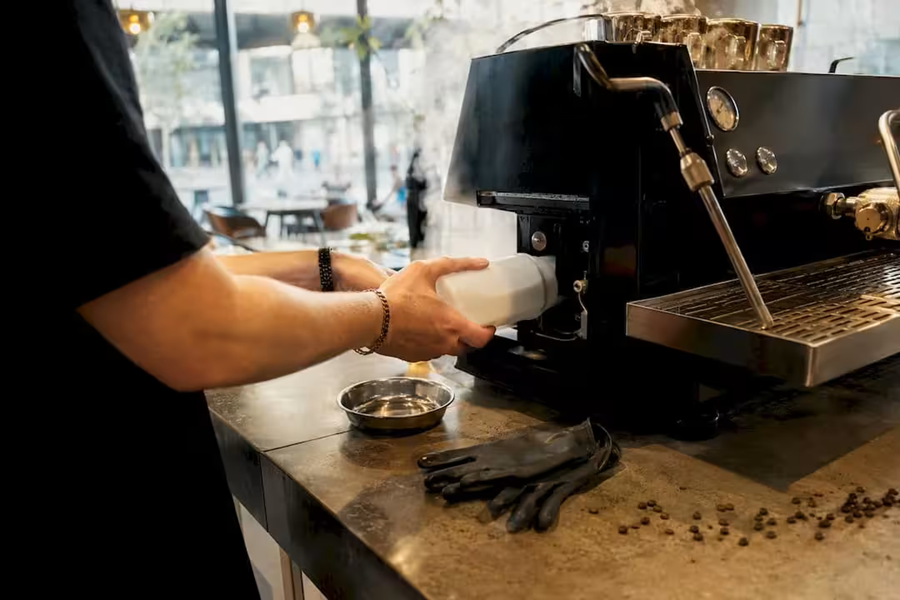
Turn off your espresso machine and empty the water reservoir completely. If your machine includes an internal water filter pouch or cartridge, remove it first—descaling agents can damage water filters.
Mix your commercial descaling liquid with fresh water according to the manufacturer’s package instructions, then pour the solution into your water tank.
Step 2: Run Cycle Through Brew Head
Place a large collection pitcher under the group head. Turn on your machine, let it warm up, and run about half of the reservoir’s solution directly through the brew group as if you were pulling espresso shots.
Pause for 10–15 minutes halfway through. This allows the descaling solution to sit inside the internal thermoblock or boiler to dissolve stubborn limescale buildup.
Step 3: Flush Solution Through Steam Wand
Reposition your collection pitcher under the steam wand or hot water spout. Open the steam valve and run the remaining liquid out through the wand in short 20-second bursts.
Step 4: Perform a Thorough Fresh Water Rinse
Never skip this step, or your next espresso will taste like cleaning chemicals! Thoroughly rinse the water reservoir, fill it to the maximum line with fresh, cold filtered water, and run the full tank through both the group head and steam wand until completely empty.
Step 5: Clean Portafilter, Basket & Steam Tip
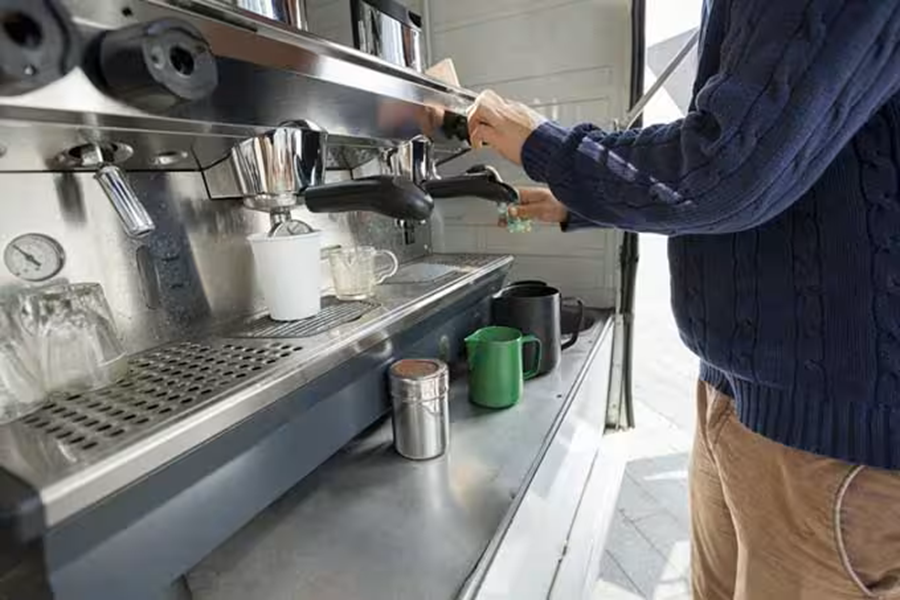
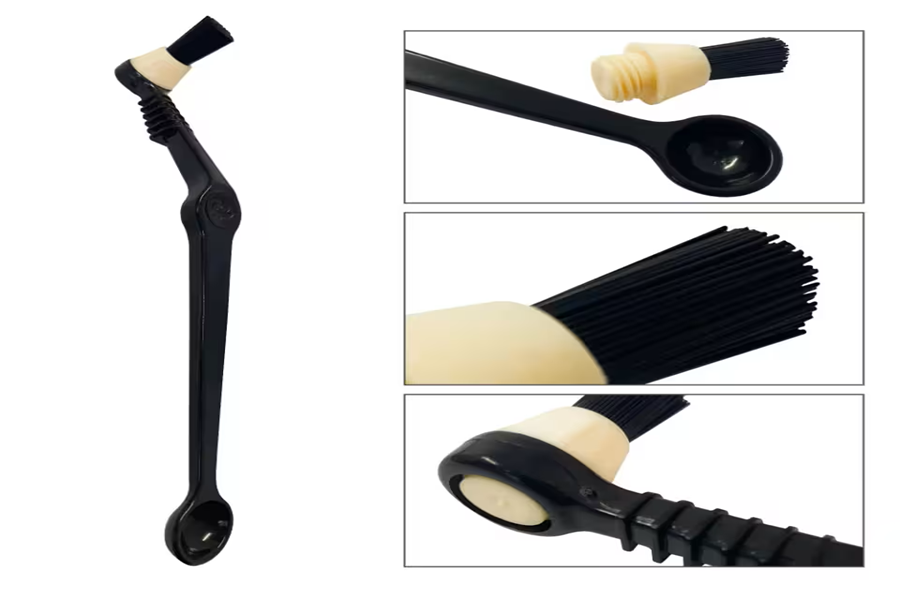
Soak your metal portafilter, filter baskets, and removable steam wand tip in warm water mixed with half a teaspoon of espresso cleaner powder for 15 minutes. Wipe away residual oils with a damp microfiber cloth and reassemble.
How Often Should You Descale?
For most compact apartment machines, aim to descale every 2 to 3 months. If you live in an area with hard tap water and don’t use a water filter pitcher, you may need to descale monthly.
Conclusion
Regular maintenance takes less than 20 minutes and keeps your compact machine running like new for years. Once your machine is clean and ready, make sure you’re pairing it with fresh grinds by exploring our guide on the 5 Best Compact Coffee Grinders.

Hi! I’m Ilhame, a coffee enthusiast and small-space living lover. I created Small Corner Coffee to help apartment dwellers and home barista lovers transform tight spaces into functional, stylish, and cozy coffee stations. When I’m not testing compact espresso gear, you’ll find me researching design trends and enjoying a perfectly pulled espresso.